Innovation + Technology
Huntsville Choices™

Mauldin & Jenkins,
CPAs & Advisors
Working in Aerospace & Defense: A Guide to Living in Huntsville
Attracting a Talented Workforce
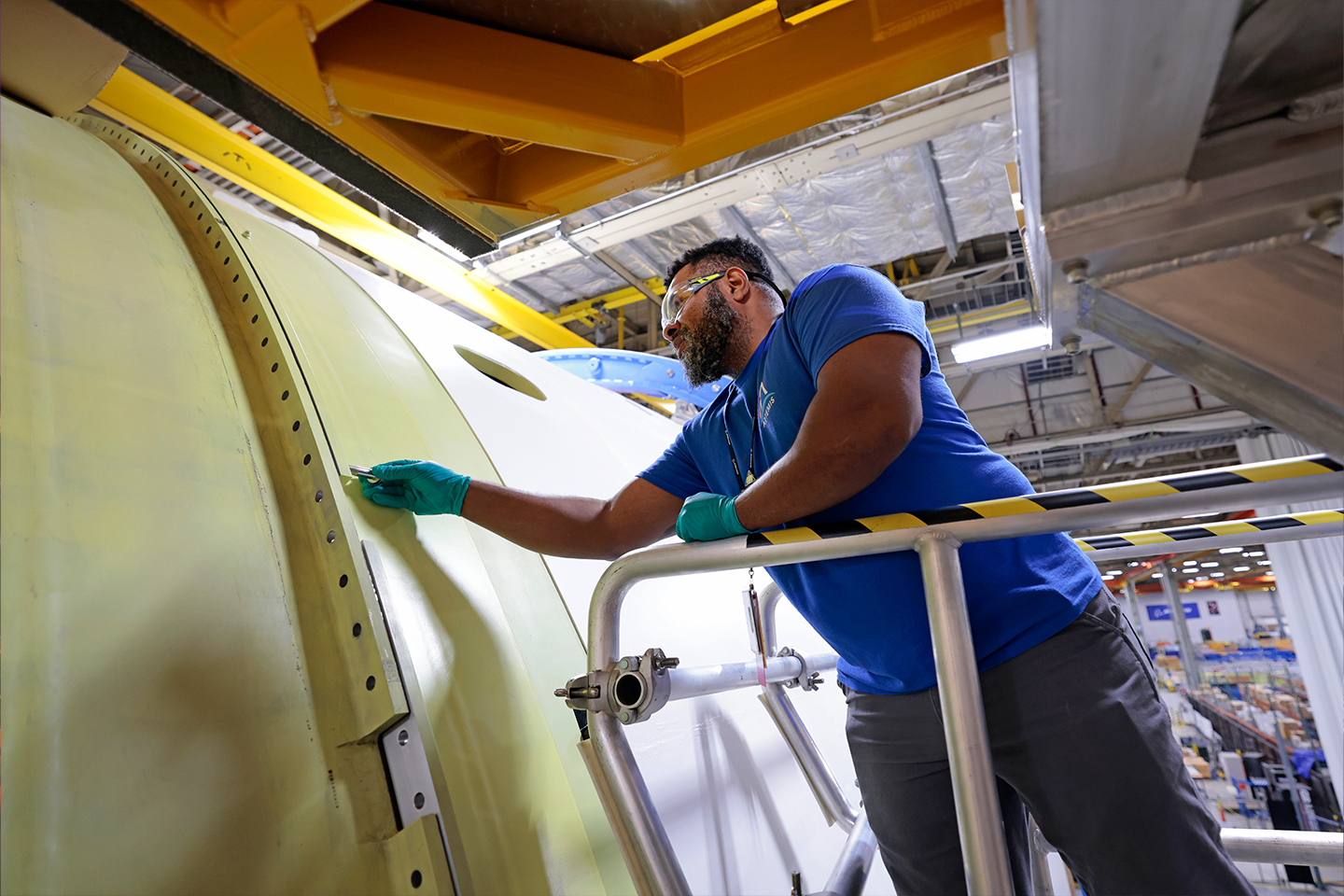
Huntsville’s rise as a Southern tech powerhouse is no surprise to anyone familiar with the Rocket City. With its rich aerospace heritage, Huntsville has attracted government agencies, private companies, and a talented workforce, who have collectively transformed the city into a center for research, development, and high-tech industry.
Interest in the Rocket City is high on a national scale. Huntsville ranked No. 1 on CBRE’s 2024 list of up-and-coming tech talent markets. This annual Scoring Tech Talent Report evaluated the ability of 75 cities to attract and grow tech talent in the United States and Canada. Key findings from the study indicated that Huntsville’s local tech employment had grown by 17.9% in the past five years, with the city’s total tech employment being 25,910. Separately, in 2025, the City of Huntsville was named to Fast Company’s list of the “World’s Most Innovative Companies” – the first city to ever be featured on the list.
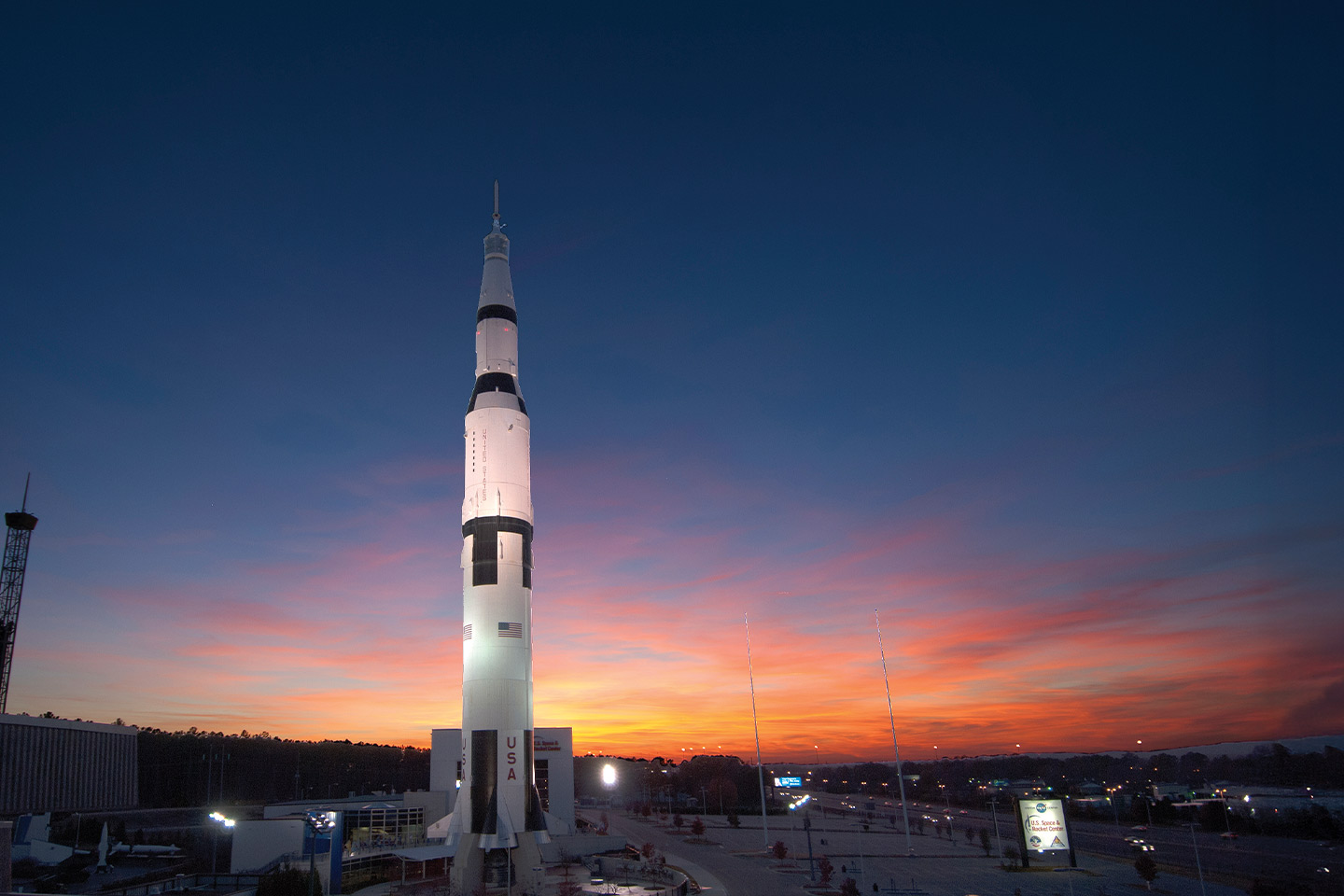
Huntsville’s reputation as a hub of scientific and technological excellence dates back to the mid-20th century, when it became central to the U.S. space program. Home to NASA’s Marshall Space Flight Center and the U.S. Army’s Redstone Arsenal, the city played a pivotal role in developing the Saturn V rocket that propelled astronauts to the moon. Today, aerospace and defense remain cornerstones of Huntsville’s economy, with numerous contractors and research institutions supporting ongoing missions in space exploration, missile defense, and military technology.
Beyond aerospace, Huntsville has diversified its technology sector, attracting companies specializing in cybersecurity, biotechnology, advanced manufacturing, and information technology. The city’s Cummings Research Park, the second-largest research park in the United States, hosts over 300 companies and organizations, ranging from Fortune 500 giants to small startups. This environment fosters collaboration, innovation, and entrepreneurship, making Huntsville a magnet for talent and investment.
Huntsville’s commitment to education fuels its technological growth, as does the collaboration fostered between higher education and research institutions, major corporations, and startups. The University of Alabama in Huntsville and Alabama A&M University are notable contributors to the region’s advancement in technology and innovation through their advanced degrees in STEM fields. The AI Research Collaborative, led by UAH’s Invention to Innovation Center, is focused on establishing North Alabama as a hub for AI research. In nearby Tanner, Alabama, the Alabama Robotics Technology Park serves as a unique training and R&D complex for advanced technologies like robotics, automation, and EV production.
Huntsville’s thriving tech community is further supported by a robust calendar of events and conferences that bring together industry leaders, innovators, and aspiring entrepreneurs. Events like the P.R.O.P.E.L. Small Business & Entrepreneur Summit – made possible by Innovate Alabama and the Huntsville/Madison County Chamber Foundation – aim to create a collaborative environment where innovation and opportunity converge. Eagerly anticipated each year, the HudsonAlpha Tech Challenge (HATCH) engages the developer community to address challenges within life sciences through business strategy, software development, and technology. National Cyber Summit, the nation’s most innovative cyber security-technology event, happens annually and offers unique educational, collaborative, and workforce development opportunities. Additionally, CodeHSV schedules regular mixers and meetups for tech enthusiasts to network and connect.
The Alabama Robotics Technology Park (RTP) is an Alabama Industrial Development Training (AIDT) facility located in Tanner, Alabama. The three-building campus targets the needs of the robotics industry, and each building is designed to address specific industry needs – providing top-notch education and hands-on training in robotics, advanced manufacturing, and automation. Services are provided to Alabama business clients at no cost to the company or employee. The park is also focused on the future by introducing K-12 students, teachers, and parents to the robotics industry via the RTP Mobile Robotic Training Lab. RTP’s training staff are experts in their fields, such as mechatronics, robotic welding, and programmable logic controllers (PLC), making sure that all workforce training is industry-relevant and current. This infrastructure supports the state of Alabama’s desire to be “Ahead of the Game” in the robotics industry.
Home to Fortune 500 companies, local and global high-tech enterprises, thriving incubators, accelerators, government agencies, and competitive higher education institutions, as well as areas to live and play, Huntsville’s Cummings Research Park is truly a “park of the future.” Established in 1962, the park has grown to accommodate 300+ companies, 26,000 employees, and 12,500+ students on 3,843 acres, making it the second-largest research park in the country and the fourth-largest in the world. Major industries inside the park include aerospace, defense, engineering, biotechnology, advanced manufacturing, software development, information technology, and cybersecurity. Cummings Research Park also has bars and eateries, music venues, and 13 shuttle shops and hosts events like food truck rallies, happy hours, and pop-up popsicle and coffee stands, plus community events hosted by businesses and retail tenants.
Headquartered at Redstone Arsenal, DEVCOM Aviation & Missile Center (AvMC) is the Army’s primary center for developing, integrating, demonstrating, and sustaining Army aviation and missile systems, with the ultimate goal of war-winning future readiness. AvMC has been at the forefront of aviation and missile technology for more than six decades. The AvMC team is approximately 12,000 strong and includes innovators, researchers, and world-class scientists and engineers. AvMC is a part of the U.S. Army Combat Capabilities Development Command, a major subordinate command
of the U.S. Army Futures Command.
Since 1971, FBI Redstone has grown from its original role as the FBI Explosives Center for Excellence to a focused growth area for training, data analytics, and cyber intelligence. Today, more than 1,300 personnel perform various operational roles on nearly 1,600 acres of secure land with modern facilities near other government agencies, including NASA, the Missile Defense Agency, and Redstone Test Center. Every day, personnel at FBI Redstone conduct forensic analysis in a lab environment, sort through data for critical investigations, and monitor networks for cyber attacks, acting as the epicenter of the FBI’s technology infrastructure.
For more than six decades, dating back to the groundbreaking Apollo moon missions of the 1960s and ‘70s, both NASA and the United States have relied on Huntsville’s Marshall Space Flight Center to deliver its most vital propulsion systems and hardware, flagship launch vehicles, world-class space systems, state-of-the-art engineering technologies, and cutting-edge science and research projects. Marshall is currently one of NASA’s largest field centers, with a total workforce of over 6,000 employees and an annual budget of approximately $5 billion. Marshall’s expertise and capabilities are crucial to the development, power, and operation of the engines, vehicles, and space systems America uses to conduct unprecedented missions of science and exploration throughout the solar system, enabling or enriching nearly every facet of the nation’s ongoing mission of discovery.
The Defense Intelligence Agency’s Missile and Space Intelligence Center (MSIC) provides its customers – including weapons developers, policymakers, and homeland security – intelligence assessments on foreign weapons systems, especially air and missile defense systems. MSIC houses military and civilian personnel who use scientific and technical methods to evaluate intelligence data and determine the characteristics, performance, operations, and vulnerabilities of foreign weapons systems. MSIC’s Richard C. Shelby Center for Missile Intelligence at Redstone Arsenal provides ample workspace for hands-on and virtual testing and evaluations.
A component of the U.S. Department of Defense, the Missile Defense Agency’s (MDA) mission is to develop, deploy, and sustain layered and integrated missile defense capabilities to defend the United States, its deployed forces, allies, and friends from missile attacks in all phases of flight. MDA’s workforce includes government civilians, military service members, and contractor personnel in multiple locations around the world, including Redstone Arsenal. The MDA is focused on retaining and recruiting a dedicated workforce interested in supporting our national security.
The National Center for Explosives Training and Research (NCETR) is a world-class facility that consolidates the Bureau of Alcohol, Tobacco, Firearms, and Explosives’ (ATF) core explosives and fire programs. Located at Redstone Arsenal in Huntsville, NCETR provides outstanding training facilities and staff in the delivery of life-saving explosives and arson training.
Redstone Arsenal is a United States Army post adjacent to Huntsville and home to dozens of tenants, including NASA’s Marshall Space Flight Center, the FBI, and – most recently – U.S. Space Command. A Federal Center of Excellence, Redstone Arsenal is one of the country’s most strategically significant defense campuses. It was founded during World War II and has origins as a munitions factory, although today it’s the center of testing, development, and doctrine for the Army’s missile programs.
Mixed-use office park Redstone Gateway, located on 468 acres in Redstone Arsenal, is a joint venture development between COPT Defense Properties and Jim Wilson & Associates, LLC. It is home to leading defense, aerospace, and research companies that are pioneering innovative technologies, including, among others, Cummings Aerospace, Yulista, Peraton, KBR, Northrop Grumman, Boeing, and Abaco Systems. Redstone Gateway offers a variety of employee-friendly office park amenities, such as restaurants, a coffee shop, walking paths, a daycare, and hotels.
The Redstone Test Center (RTC) is a United States Army Test and Evaluation Command (ATEC) tenant at Redstone Arsenal. RTC encompasses over 14,000 acres, providing cutting-edge test and evaluation support for military equipment, weapons, and transportation. RTC’s mission is to provide superior technical expertise and state-of-the-art facilities and capabilities to plan, conduct, analyze, and report the results of tests on aviation, missile, and sensor systems, subsystems, and components.
The U.S. Army Aviation and Missile Command (AMCOM) develops and delivers responsive aviation, missile, and calibration materiel readiness to the United States Army in order to optimize joint warfighter capabilities at the point of need. AMCOM is primarily responsible for lifecycle management of Army missile, helicopter, unmanned ground vehicle, and unmanned aerial vehicle weapon systems.
U.S. Army Contracting Command (ACC) soldiers, civilians, and contractors support the warfighter worldwide through the acquisition of goods and services vital to the soldier’s mission and well-being. As the Army’s business conduit, ACC offers the contracting expertise of some of the best-trained people in the Army, ready to support the warfighter while ensuring responsible stewardship of taxpayers’ funds. ACC ensures contracting support to the warfighter as mission requirements emerge and as the Army transforms and moves within the Continental United States and throughout the globe.
The U.S. Army Engineering and Support Center, Huntsville, is a specialized agency of the U.S. Army Corps of Engineers. The center provides specialized technical expertise, global engineering solutions, and cutting-edge innovations through centrally managed programs in support of national interests.
The U.S. Army Materiel Command (AMC) develops and delivers materiel readiness solutions to ensure globally dominant land force capabilities. Headquartered at Redstone Arsenal, Army Materiel Command is one of four Army Commands. AMC synchronizes and integrates the Army’s total capabilities in support of the Chief of Staff of the Army’s priorities and Combatant Command requirements. As the Army’s Lead Materiel Integrator, Army Materiel Command manages the global supply chain, synchronizing logistics and sustainment activities across the Army.
The U.S. Army Program Executive Office – Aviation serves soldiers and the nation by designing, developing, delivering, and supporting advanced aviation capabilities for operational commanders and the nation’s allies.
The U.S. Army Program Executive Office – Missiles and Space (PEO MS) develops, fields, and sustains defensive and offensive integrated fires capabilities in support of the joint all-domain battlespace. It is on the cutting edge of the Army’s long-range precision fires, air and missile defense, hypersonic, directed energy, counter-unmanned aerial systems, integrated fires mission command, and aviation and ground missiles modernization initiatives.
The U.S. Army Security Assistance Command (USASAC) leads the AMC Security Assistance Enterprise, as well as develops and manages security assistance programs and foreign military sales cases to build partner capacity, support Combatant Command engagement strategies, and strengthen U.S. global partnerships.
The U.S. Army Space and Missile Defense Command (USASMDC) develops and provides current and future global space, missile defense, and high-altitude capabilities to the Army, joint force, allies, and partners to enable multi-domain combat effects; enhance deterrence, assurance, and detection of strategic attacks; and protect the nation.
Huntsville boasts the state’s most visited attraction and the largest space museum in the world: the U.S. Space & Rocket Center (USSRC). A Smithsonian Affiliate and the Official Visitor Center for NASA’s Marshall Space Flight Center, the USSRC is home of Space Camp®, Aviation Challenge®, Space Camp® Robotics, and U.S. Cyber Camp®. Of the USSRC’s large rocket and space hardware collection, more than 700 objects are currently on display. The museum’s priceless objects include the National Historic Landmark Saturn V moon rocket, a full space shuttle stack, and next-generation technologies that are propelling space exploration into the future. In addition, the USSRC’s world-class INTUITIVE® Planetarium transports guests through the universe with live, interactive shows under a 67-foot dome, while simulators such as Moon Shot and G-Force help them feel like an astronaut.