
Blue Bikes
Huntsville Public Transportation

TRAM
Sitting at the convergence of several major road arteries, including I-65, I-565, and U.S. Route 72, Huntsville and its surrounding cities are important centers for trucking transportation. A number of trucking companies have chosen Huntsville as their home base and provide not only freight transportation, but also logistics management and warehousing.
Huntsville’s auspicious railway history began in the mid-1850s with the arrival of the Memphis & Charleston Railroad, which transformed Huntsville from a small Southern town to a vital commercial hub. The railroad still proves to be a robust industry today. Norfolk Southern – a Class 1 freight railroad – operates out of the Port of Huntsville, the city’s inland port, which provides direct access to major ports along the East and West coasts. The Huntsville and Madison County Railroad Authority, a shortline railroad, runs on nearly 14 miles of track with interchanges with Norfolk Southern in Huntsville and freight railroad company CSX in Tanner, Alabama.
One of the city’s most unique offerings, the International Intermodal Center (IIC) at the Port of Huntsville is a premier inland port facility that has integrated rail, highway, and air transportation. Able to efficiently handle both domestic and international cargo, the IIC has a fundamental role in the supply chain management of the Southeast.
A half-hour’s drive from Huntsville, the Port of Decatur is one of the oldest – and busiest – ports on the Tennessee River with access to the Tennessee-Tombigbee Waterway. Not only is it serviced by the Norfolk Southern and CSX railroads, but it also links to major highways (I-65, I-565) and barge facilities on the Tennessee River, making it an indispensable part of the regional economy.
Voted “Best Small Airport” in the United States in the 2025 Newsweek Readers’ Choice Awards, Huntsville International Airport (HSV) serves more than 1.4 million passengers each year and boasts short security lines and a user-friendly terminal. Five major airlines operate out of HSV and offer nonstop flights to 18 cities such as Chicago, Tampa, New York City, Los Angeles, Las Vegas, and Washington D.C. Over the past two years, aesthetic and operational renovations have been completed at the airport including a new rental car return lot, expanded elevator and escalator access, and updated bathrooms. Signature Aviation at Huntsville International Airport provides the city with premier fixed-based operation services.
HSV is also in the process of adding spaceport capabilities to its docket. Huntsville’s Spaceport – one of 20 FAA-licensed spaceports nationwide – is helping to pioneer the growing commercial space industry.
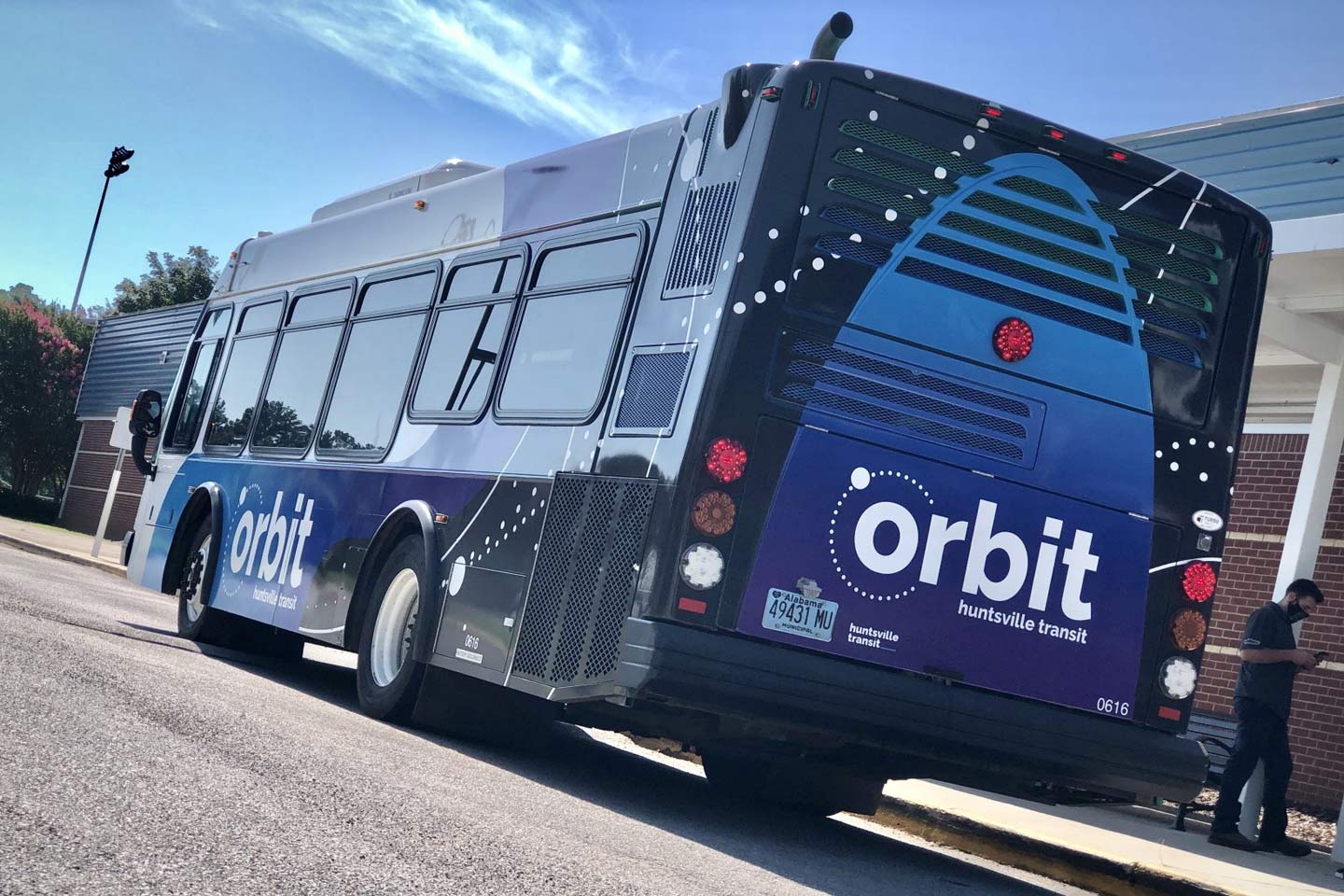
Public transportation is a sustainable and cost-effective way to travel in and around Huntsville. Huntsville Transit oversees the city’s bus system, which has a total ridership of more than 2,500 passengers daily. For those with disabilities or mobility challenges, the city also offers paratransit services. Madison residents can take advantage of MARS (Madison Assisted Ride System) or TRAM (Transportation for Rural Areas of Madison County) to get around the county, while nearby Decatur has NARCOG Transit and MCATS (Morgan County Area Transportation System). While Athens does not have a dedicated transit system, it does provide services such as transportation to the elderly and disabled through Limestone County’s Council on Aging.
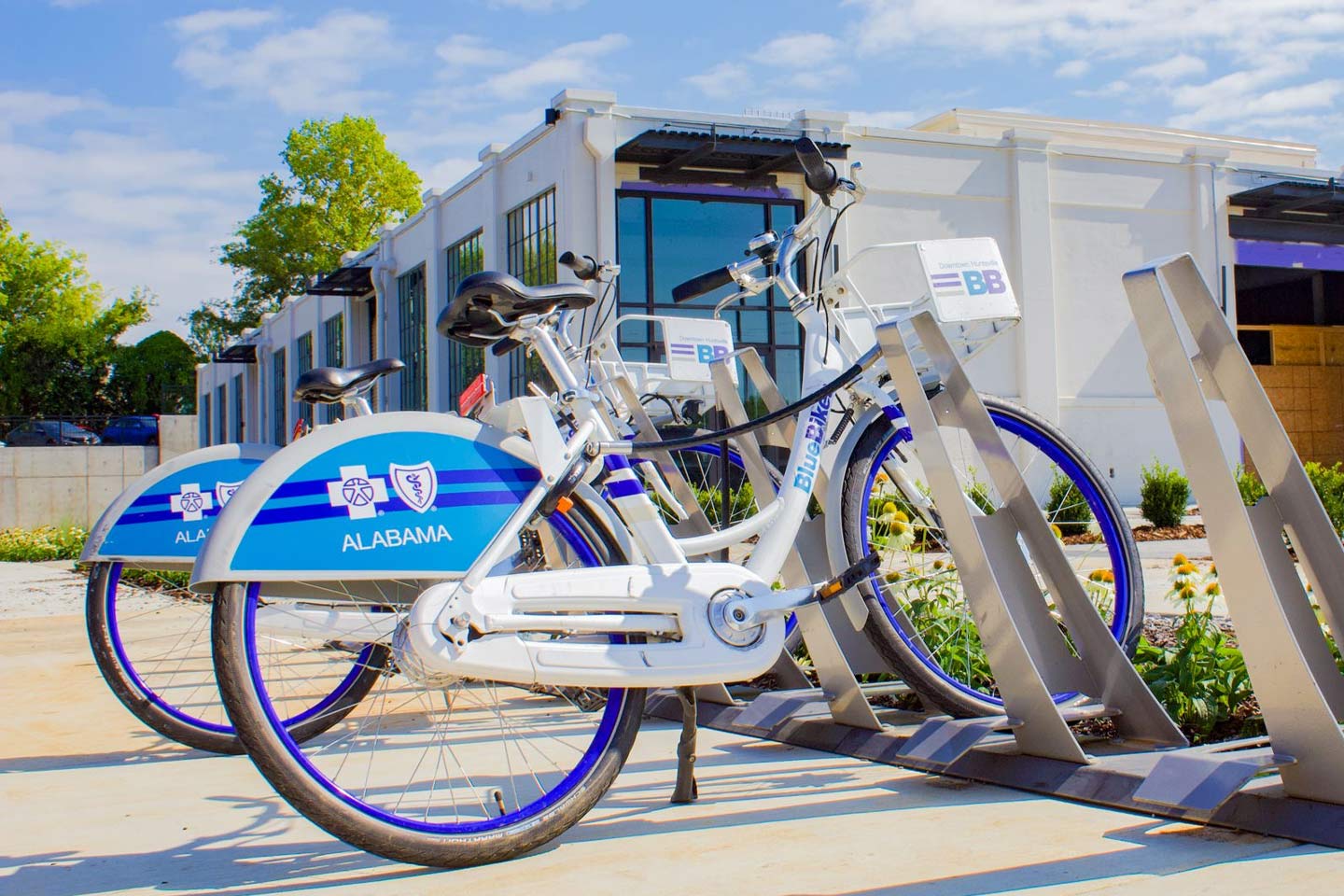
Biking is another low-cost, environmentally friendly option for getting around the city. Approximately 30 Blue Bikes are available for rent at 11 stations around downtown Huntsville, and there is an additional set located in Decatur. Alternatively, Rocket City eBikes offers a fleet of eBikes available for rent for an hour, half-day, and full day. Plentiful bike lanes throughout downtown and along Huntsville’s greenways allow for recreational riding and easy commutes to work.

Presented by BlueCross and BlueShield of Alabama and in partnership with the City of Huntsville, Downtown Huntsville, and Tandem Mobility, Blue Bikes gives city bikers convenient access to 30 bikes available at 11 stations around town. Riders pay $2 for every 30 minutes of riding. Bike rentals are available through the free Movatic app.
Huntsville Transit operates 16 buses on 12 fixed routes across a service area of more than 100 square miles. The bus system operates daily excluding Sundays. In addition, Access is a public transportation service available to those with disabilities and senior citizens who do not live near a bus route.
Signature Aviation at Huntsville International Airport provides a range of fixed-base operations services, accommodating general, commercial, and business aviation. In nearby Meridianville, Huntsville Executive Airport serves as a general aviation airport, catering to both corporate and private aircraft.
Electric vehicle ownership continues to rise in the state of Alabama, and the number of charging stations in Huntsville continues to increase as well. There are dozens of charging stations across the city in locations such as the U.S. Space & Rocket Center, Bridge Street Town Centre, MidCity, and the Twickenham district.
The Huntsville International Airport (HSV) boasts many of the amenities of a large airport with the care and convenience that only a small airport can provide. Offering nonstops to 18 cities, the airport operates flights through Allegiant, American Airlines, Breeze, Delta, and United Airlines. Airport amenities include complimentary Wi-Fi, cell phone charging stations, shopping and dining options, and an outdoor pet park.
For decades, interstate highways have paved the way for Huntsville’s economic success. Huntsville provides proximity and easy access to several cities throughout the Southeast. With I-565 bisecting Huntsville and connecting to I-65 just west of the city, Huntsville is within 150 miles of major metropolitan areas such as Birmingham and Nashville.
Spanning 19,500 route miles and 22 states, railway company Norfolk Southern connects Huntsville to the rest of the country, as it provides essential rail cargo services to the Port of Huntsville. The region also partners with CSX via the Huntsville and Madison County Railroad Authority in Tanner, Alabama.
Huntsville’s Spaceport is one of 20 FAA-licensed spaceports nationwide and is helping to pioneer the future of commercial spaceflight. More than an infrastructure project, Spaceport is symbolic of Huntsville’s ongoing commitment to exploration, innovation, and economic development.
As one of the fastest-growing cities in the country, Huntsville’s demand for freight and logistics services has soared in tandem with its population. Huntsville is home to a mix of national carriers, regional firms, and local independent operators. The city’s infrastructure supports these operations through facilities like the International Intermodal Center, several industrial parks, and interstate connectivity.
Connected to over a dozen inland rivers, the Tennessee River is a primary means of transporting products around the country – and 17% of the river is in Alabama. As one of the busiest ports on the river, the Port of Decatur handles a significant portion of the more than 5 million tons of river freight that travel past Decatur.