Huntsville’s Early History
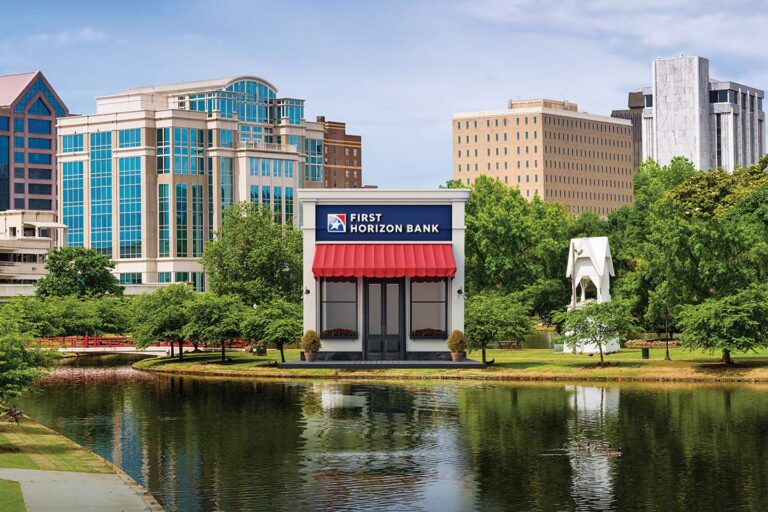
Throughout the Civil War, Huntsville, Alabama was a trade and commerce hub, thanks to the railway and Tennessee River. In fact, Huntsville is home to one of the oldest existing railroad depots, where you can still see Confederate graffiti. Huntsville’s infrastructure was mostly spared during the war, allowing preserved history including Antebellum homes.
After the war, Huntsville became a farming and textile community, with several large mills in the city supported by thousands of workers. The Lincoln Mill, a nationally registered historical site one mile from downtown, would become office space for NASA – engineers actually designed the Apollo Lunar Rover at the location – and today the city has repurposed the mill into business, shopping, and dining space.
Today, Huntsville is home to Marshall Space Flight Center and to the U.S. Space & Rocket Center. But how did a small mill town in Alabama become a booming space research center, often called “Rocket City” and “America’s Birthplace of Space”?

Huntsville Becomes a Space Hub
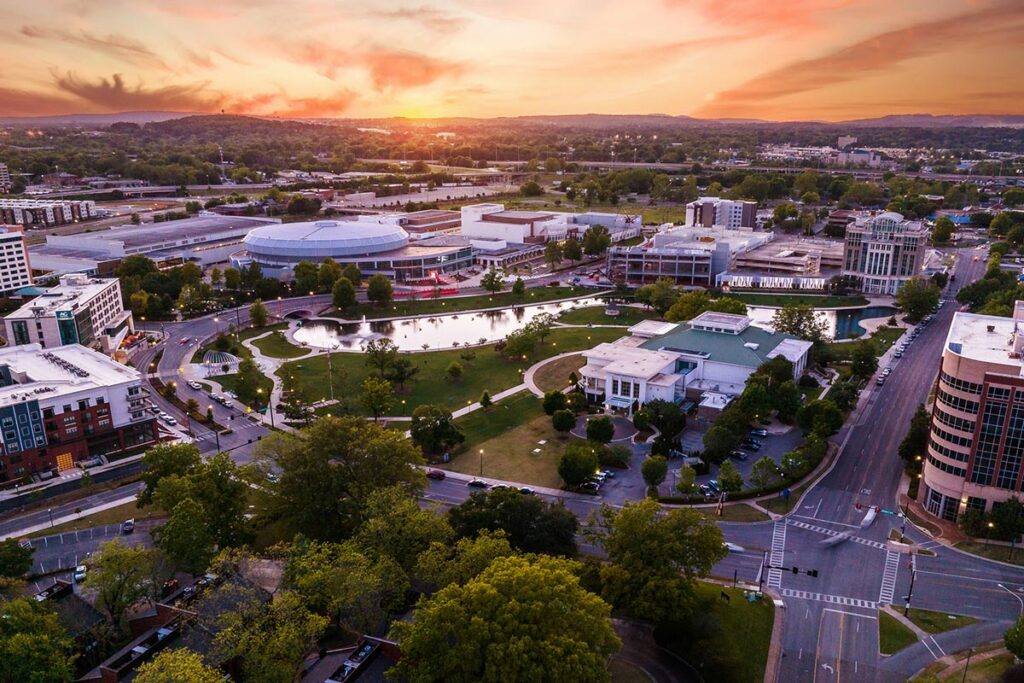
In 1949, the Secretary of the Army decided to make Redstone Arsenal, located in Huntsville, the home of the Army Rocket and Missile Center. The following year, Huntsville became home base for Wernher von Braun’s German rocket team following a move from Ft. Bliss, Texas.
As operations expanded, the teams were divided into three departments: The Army Guided Missile Development Division, the Army Ballistic Missile Agency, and the NASA Marshall Space Flight Center, which still exists today as a crucial part of America’s space program, employing more than 6,000 team members. It was around this time that “Rocket City” became a common nickname for Huntsville.

The “Golden Years”
The years of 1950-1970 are often referred to as the “Golden Years,” of space travel, marked by the U.S. space race as former President John F. Kennedy challenged the country to land a man on the moon. This goal was eventually accomplished over an eight year period between three NASA programs, advancing science forever.
In 1956, The Army Ballistic Missile Agency (ABMA) was activated at Redstone Arsenal to complete the development of the Redstone missile, which was later used in Project Mercury – the first U.S. program that put humans in space. The project required contributions from more than 2 million individuals and was instrumental in proving humans could withstand weightless flight.
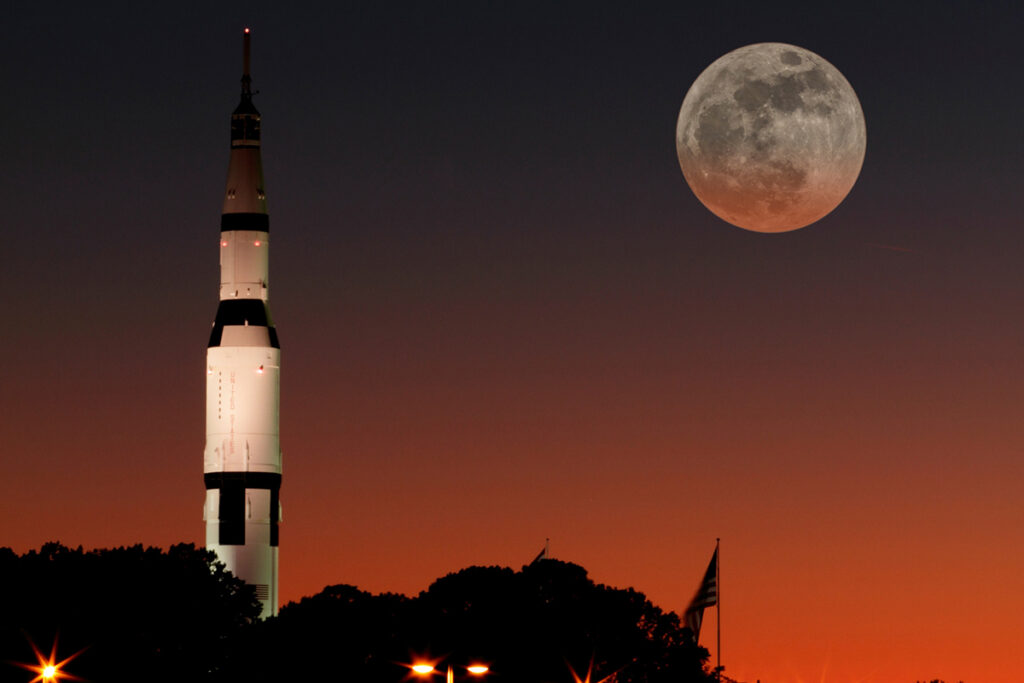
In 1965, engineers at the Marshall Space Flight Center began test fire of the Saturn V Rocket, which was the most powerful rocket in history at the time and would ultimately be used in the Apollo missions, putting man on the moon for the first time in history in 1969. This work was foundational in understanding propulsion for space shuttles. One of the real Saturn V rockets is on display in the U.S. Space and Rocket Center (along with a full scale replica), as well as a moon rock from the Apollo mission and other artifacts.
Additional Space Accomplishments in Huntsville
Beyond the “Golden Years,” Huntsville and its NASA programs have seen many additional successes and accomplishments to advance aerospace research, including designing and building modules for the International Space Station (ISS), the design of the Space Launch System, and 24/7 monitoring of the ISS at the Marshall Space Flight Center.
Today, the Marshall Space Flight Center continues to support NASA programs, including the launch of Artemis II in April of 2026, in which astronauts conducted a 10-day flyby around the moon, marking the first time humans returned to the lunar vicinity since 1972. Marshall engineers were key to setting up success for the mission by designing the core stage, developing major propulsion systems, and building the structural adapters that connect the rocket to the Orion spacecraft.
The LUCA (Lunar Utilization Control Area) and LESA (Lander Engineering Support Area) control rooms also supported science and engineering efforts for the Artemis II mission. “In addition to supporting Artemis, our Huntsville Operations Support Center teams also support the Commercial Crew Program, the SLS (Space Launch System) rocket, and International Space Station science operations,” said Harish Chandranath, Payload and Mission Operations Division Human Landing Systems project lead at Marshall Space Flight Center. Along with the flight center, Redstone Arsenal also continues to be a main base for rocket technology and missile defense.
U.S. Space and Rocket Center & Other Attractions
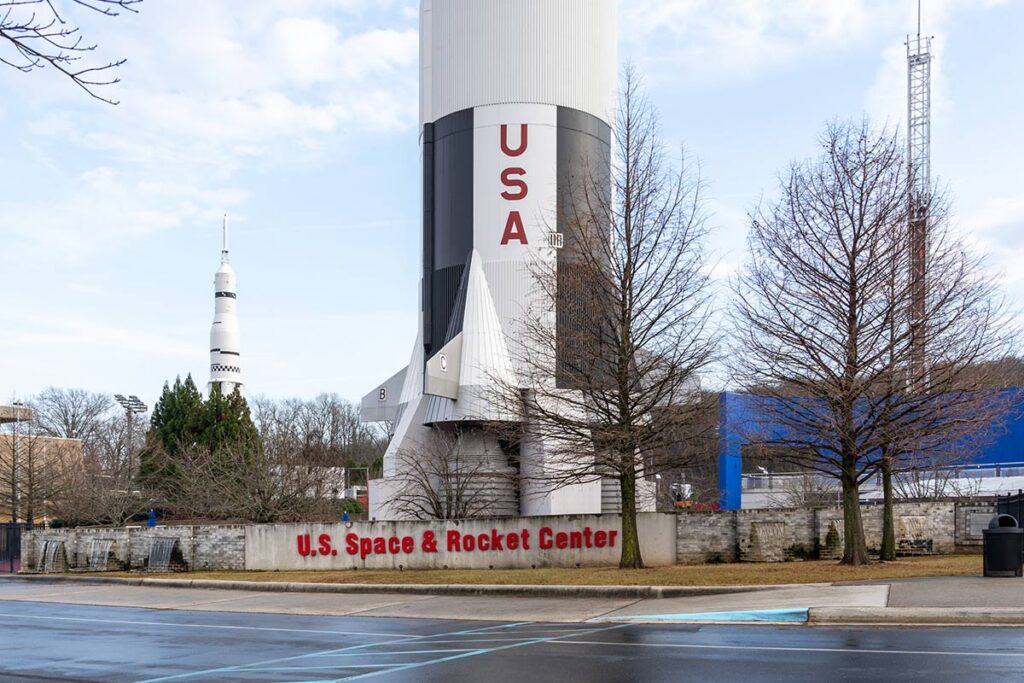
Von Braun’s project leadership was instrumental during the Golden Years, but he also had a passion for education. Wanting to showcase NASA’s technologies and hardware to the public as a learning opportunity, he approached the Alabama Legislature with the idea, which was supported. The U.S. Army donated land for the museum, and the U.S. Space & Rocket Center® officially opened in 1970.
The U.S. Space and Rocket Center, located about 10 minutes from downtown Huntsville, is the largest spaceflight museum in the world, displaying more than 1,500 objects highlighting our past, present, and future work in space. Exhibits include the Saturn V moon rocket, the Pathfinder space shuttle display, the Apollo 16 command module, several interactive experiences, and more. In addition to exhibits, the center is also home to the famous Space Camp, in which attendees learn information based on real astronaut training and enjoy immersive science and engineering experiences. The center also hosts regular events throughout the year with special presentations, guest speakers, activities for kids, and more.
For those looking for a space-related attraction for smaller children, the EarlyWorks Children’s Museum has an interactive science museum designed for ages 2 to 12. In addition, the Von Braun Astronomical Society Planetarium uses projectors to highlight stars and planets in our solar system with regular viewings and special events, along with two observatory facilities with large telescopes (access available to members only).
Whether you’re a local looking to enjoy Rocket City history or a visitor hoping to learn something new, the city’s space attractions are a must in Huntsville.

Kristen Dee, BS, MA, Summa Cum Laude
Kristen Dee is a graduate of Winthrop University where she earned a Bachelor of Science degree in integrated marketing communications, with the distinction of Magna Cum Laude and IMC Student of the Year. Following Winthrop, Kristen earned a Master of Arts in Communication from Wake Forest University. Prior to joining CMC Media & Marketing Group as editor, Kristen successfully fulfilled roles involving internal corporate communications. Today, Kristen leads ideation, conceptualization, and development of numerous health, wellness, business, sports, and lifestyle articles published in print and online for HealthScope®, CityScope®, and Choose Chattanooga® magazines – premier publications serving S.E. Tennessee and North Georgia.